
MENU
PRODUCT DESIGNER
year: 2025
MIND STUDIO AI
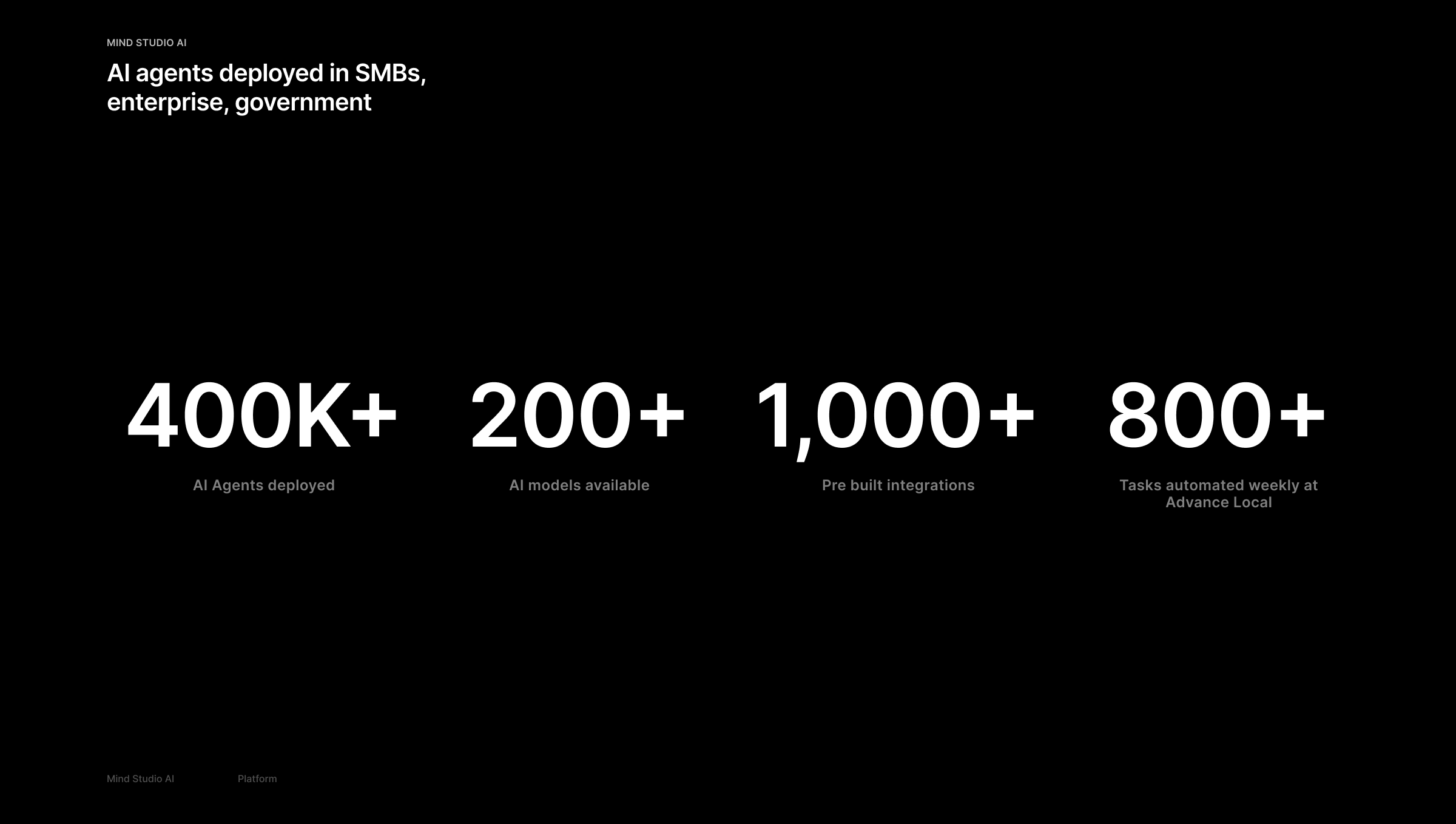
A platform for building, testing, deploying, and operating AI agents — with over 150,000 already deployed across individuals, SMBs, enterprises, and government agencies.
→ challenge
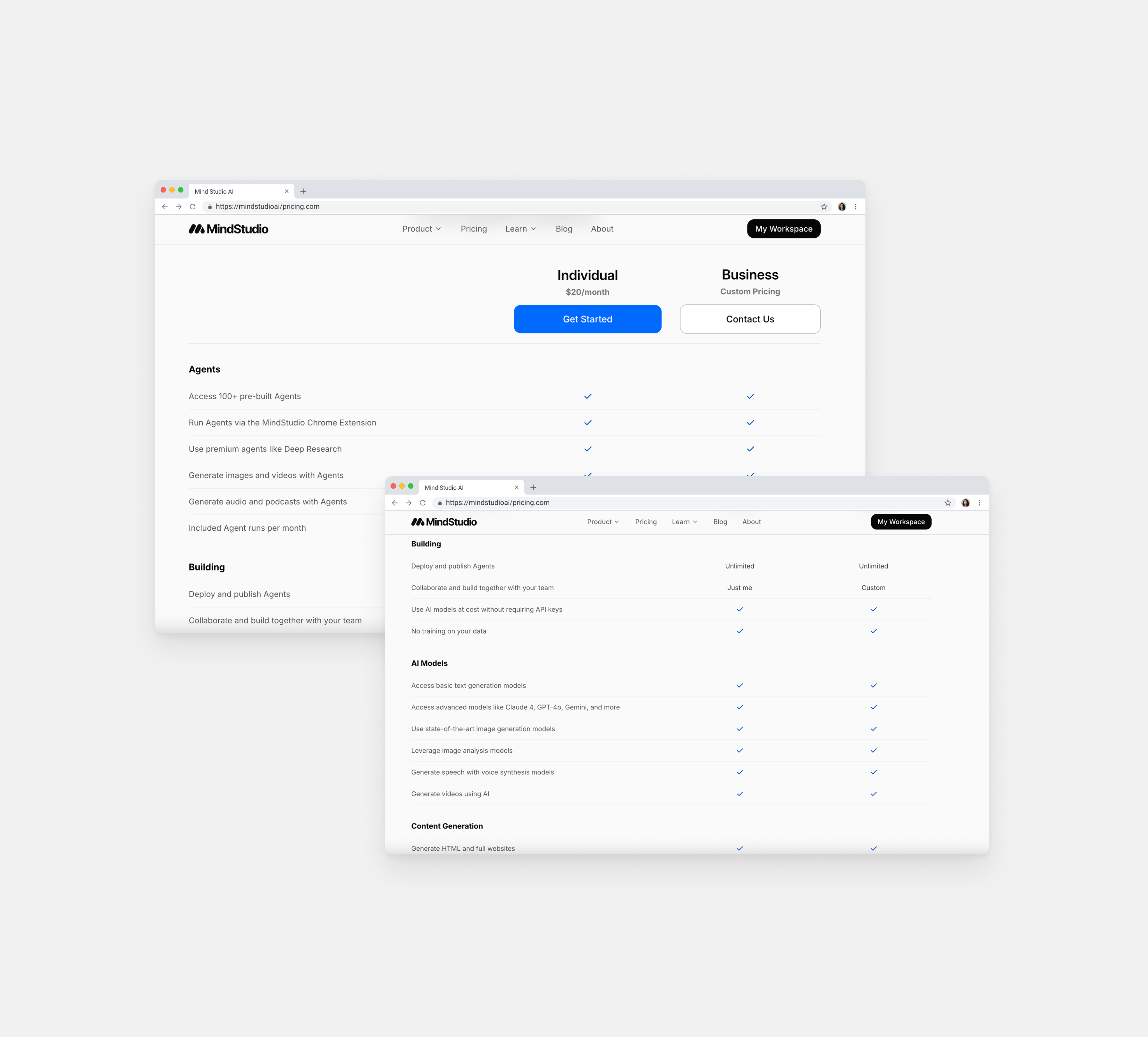
Mind Studio AI's product had two major friction points. The pricing page was a dense, hard-to-scan comparison table across four tiers that made it difficult for users to evaluate plans and understand upgrade logic. Meanwhile, the AI agent creation experience was a plain document with no real UX — it lacked visual and structural elevation, and the interface felt outdated, underrepresenting how capable the product actually was. That gap mattered especially since users regularly export and share agent outputs for presentations and research at this venture-backed ($36M raised) no-code AI agent builder — the experience needed to look as polished as it functioned.
→ Opportunity
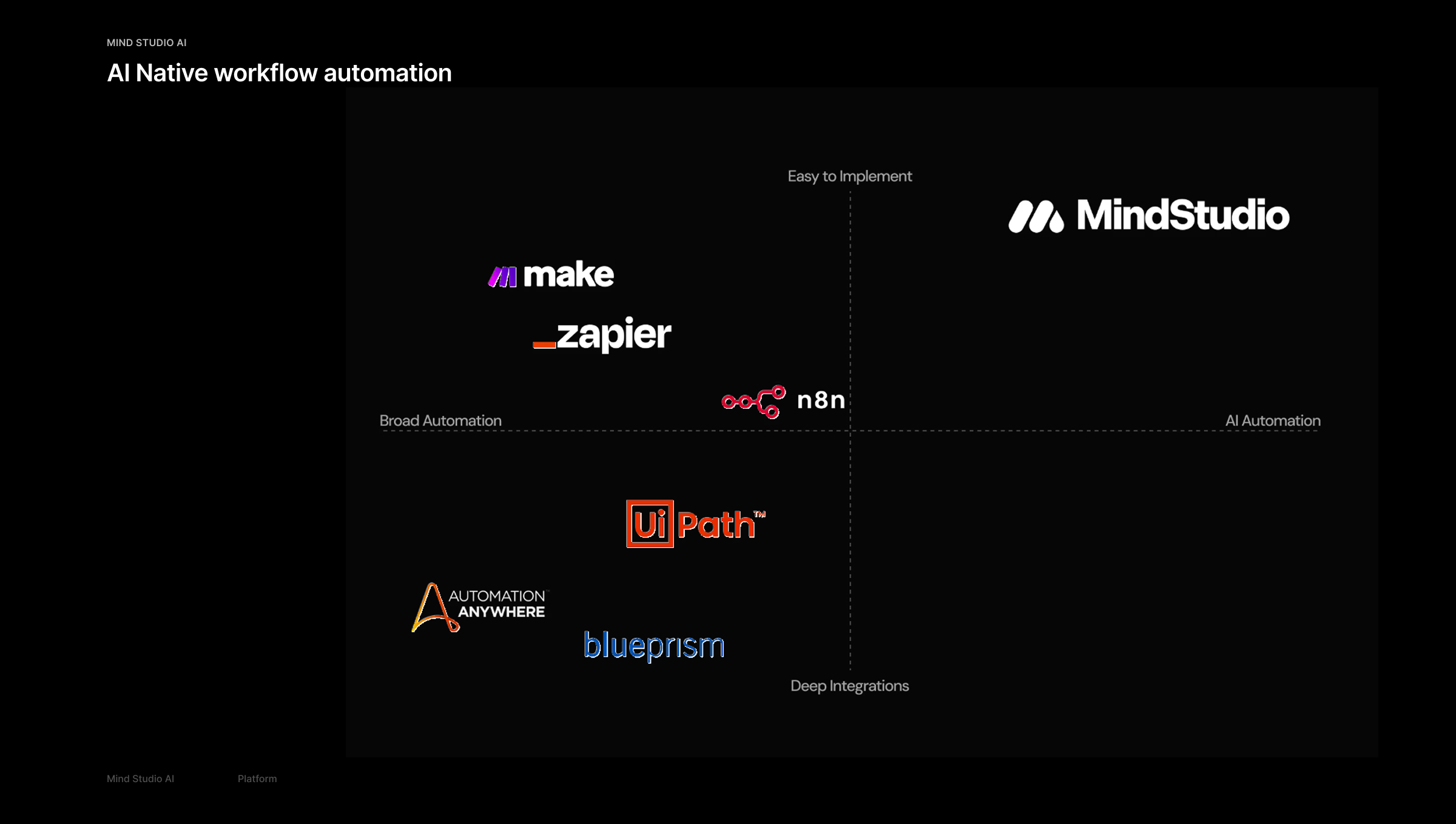
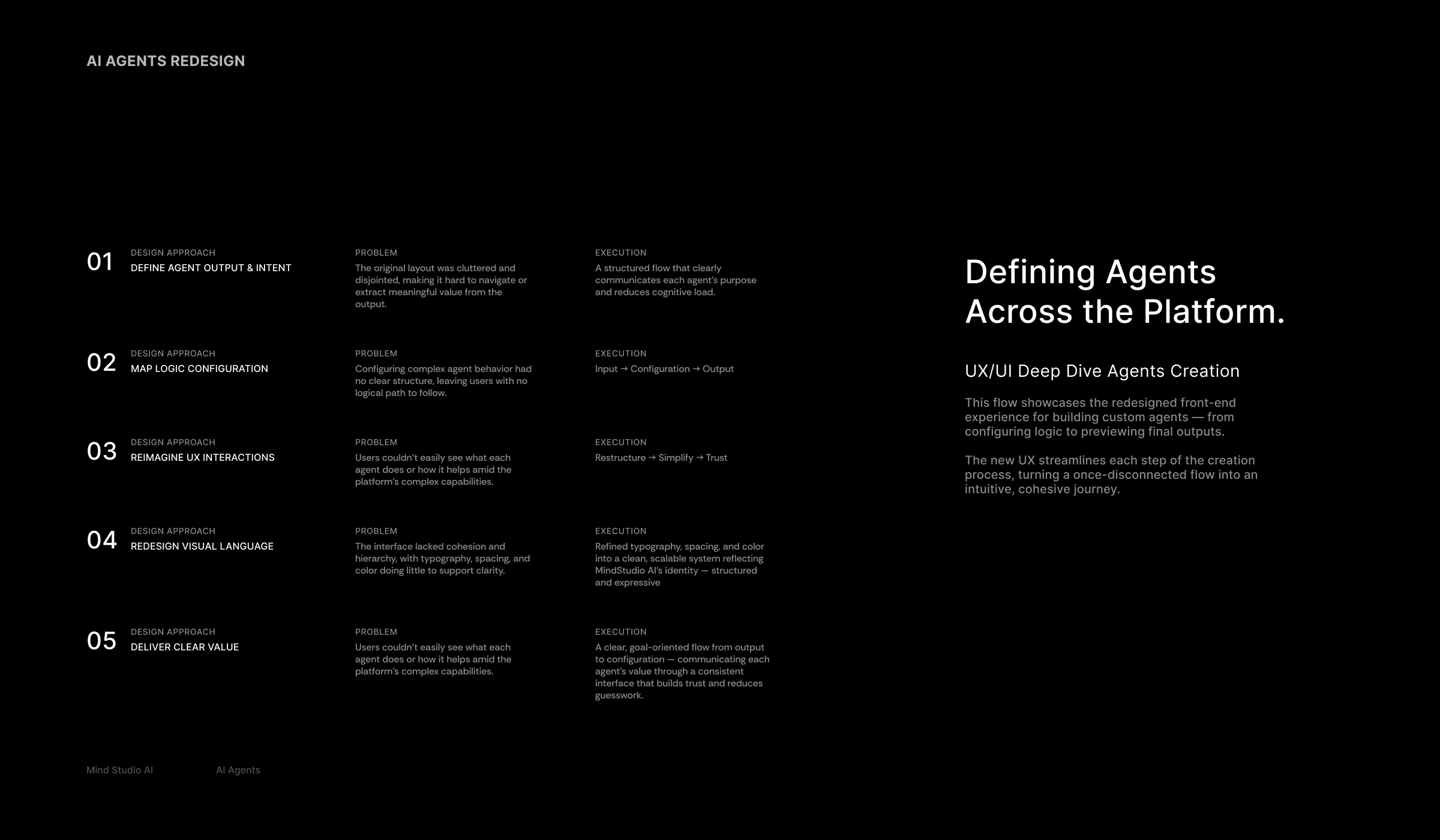
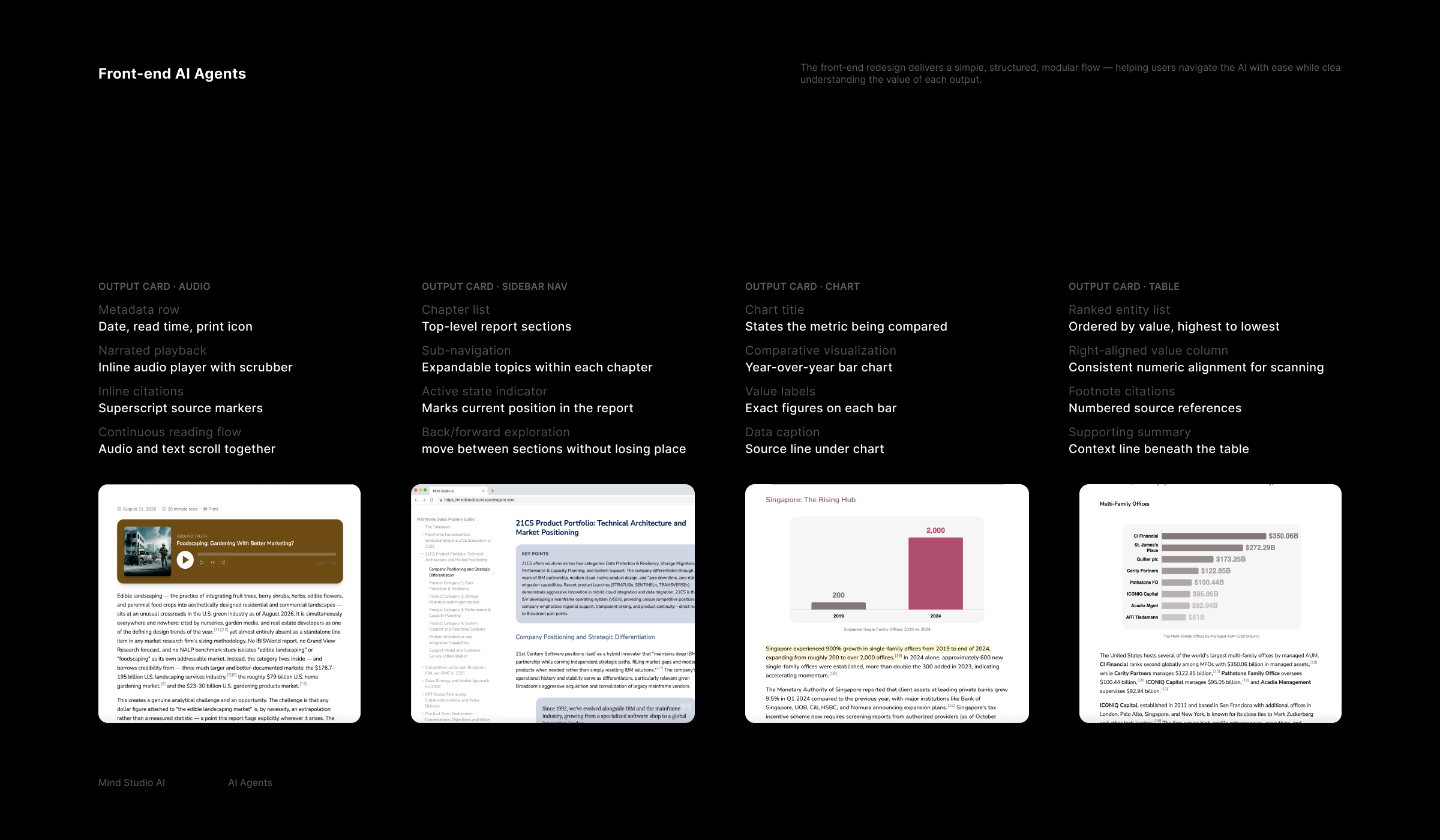
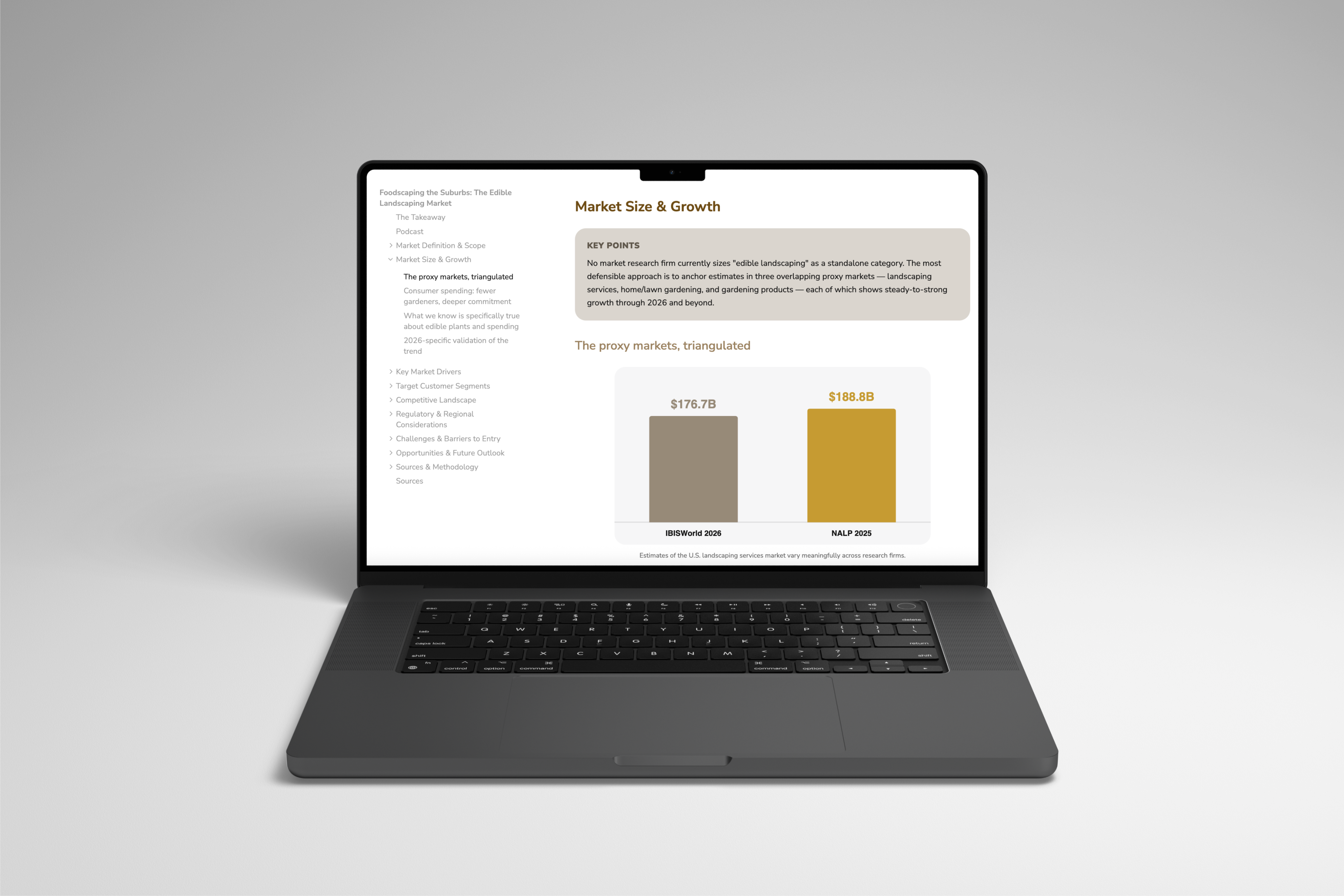
As product designer, I worked on two major initiatives: redesigning Mind Studio AI's pricing models across four tiers with a detailed feature comparison matrix to clarify value and strengthen upgrade logic, and rebuilding the front-end for every AI agent on the platform from the ground up. I redesigned the pricing page with a clear hero moment, tier icons for faster scanning, and a full feature matrix — turning a dense comparison table into something users could actually evaluate at a glance. For the agent experience, I introduced one shared front-end system — a navigational sidebar, color system, and typography — applied consistently across all four core agents, each adapting the same foundation to its own function. I restructured agent creation into a three-stage system — Input, Configuration, and Output — where each step builds on the last, guiding users through defining intent, mapping logic, and previewing outcomes. Modular layouts and dynamic logic paths turn complexity into comprehension, giving users control over tone, perspective, and context to build agents that reflect their own workflows.
→ outcome
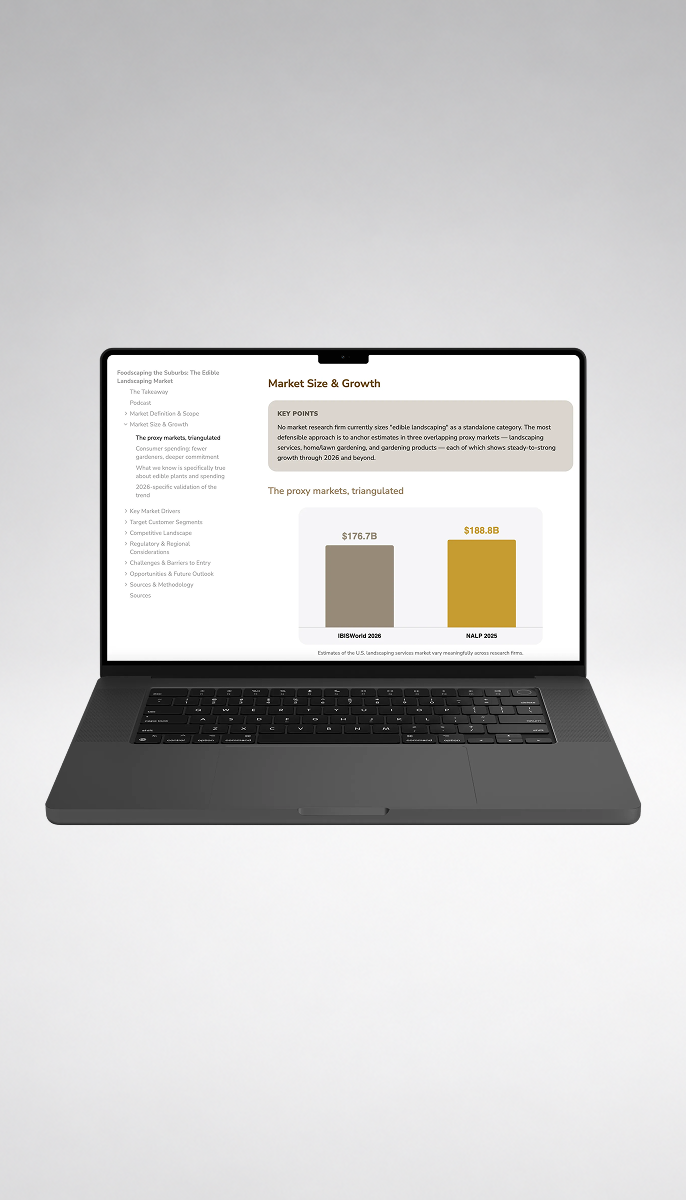
This foundation led to the redesigned Research Agent, now one of Mind Studio AI's most-utilized tools — helping cross-functional teams generate strategic, actionable insights with confidence. Clearer input guidance, structured logic configuration, and improved previews streamlined setup and significantly increased adoption.
Information Architecture
Design Systems
product design
UI/VISUAL DESIGN
pricing business model




Other Projects

Dufi
See Project
→

TableN8
See Project
→
Exponent Financial
See Project
→


MIND STUDIO AI
A platform for building, testing, deploying, and operating AI agents — with over 150,000 already deployed across individuals, SMBs, enterprises, and government agencies.
PRODUCT DESIGNER
year: 2025
→ challenge
Mind Studio AI's product had two major friction points. The pricing page was a dense, hard-to-scan comparison table across four tiers that made it difficult for users to evaluate plans and understand upgrade logic. Meanwhile, the AI agent creation experience was a plain document with no real UX — it lacked visual and structural elevation, and the interface felt outdated, underrepresenting how capable the product actually was. That gap mattered especially since users regularly export and share agent outputs for presentations and research at this venture-backed ($36M raised) no-code AI agent builder — the experience needed to look as polished as it functioned.
→ Opportunity
As product designer, I worked on two major initiatives: redesigning Mind Studio AI's pricing models across four tiers with a detailed feature comparison matrix to clarify value and strengthen upgrade logic, and rebuilding the front-end for every AI agent on the platform from the ground up. I redesigned the pricing page with a clear hero moment, tier icons for faster scanning, and a full feature matrix — turning a dense comparison table into something users could actually evaluate at a glance. For the agent experience, I introduced one shared front-end system — a navigational sidebar, color system, and typography — applied consistently across all four core agents, each adapting the same foundation to its own function. I restructured agent creation into a three-stage system — Input, Configuration, and Output — where each step builds on the last, guiding users through defining intent, mapping logic, and previewing outcomes. Modular layouts and dynamic logic paths turn complexity into comprehension, giving users control over tone, perspective, and context to build agents that reflect their own workflows.
→ outcome
This foundation led to the redesigned Research Agent, now one of Mind Studio AI's most-utilized tools — helping cross-functional teams generate strategic, actionable insights with confidence. Clearer input guidance, structured logic configuration, and improved previews streamlined setup and significantly increased adoption.
Information Architecture•Design Systems • UI/Visual Design • Product Design • pricing business model

Other Projects
Dufi
See Project
→
TableN8
See Project
→
Exponent Financial
See Project
→


MIND STUDIO AI
A platform for building, testing, deploying, and operating AI agents — with over 150,000 already deployed across individuals, SMBs, enterprises, and government agencies.
PRODUCT DESIGNER
year: 2025
→ challenge
Mind Studio AI's product had two major friction points. The pricing page was a dense, hard-to-scan comparison table across four tiers that made it difficult for users to evaluate plans and understand upgrade logic. Meanwhile, the AI agent creation experience was a plain document with no real UX — it lacked visual and structural elevation, and the interface felt outdated, underrepresenting how capable the product actually was. That gap mattered especially since users regularly export and share agent outputs for presentations and research at this venture-backed ($36M raised) no-code AI agent builder — the experience needed to look as polished as it functioned.
→ Opportunity
As product designer, I worked on two major initiatives: redesigning Mind Studio AI's pricing models across four tiers with a detailed feature comparison matrix to clarify value and strengthen upgrade logic, and rebuilding the front-end for every AI agent on the platform from the ground up. I redesigned the pricing page with a clear hero moment, tier icons for faster scanning, and a full feature matrix — turning a dense comparison table into something users could actually evaluate at a glance. For the agent experience, I introduced one shared front-end system — a navigational sidebar, color system, and typography — applied consistently across all four core agents, each adapting the same foundation to its own function. I restructured agent creation into a three-stage system — Input, Configuration, and Output — where each step builds on the last, guiding users through defining intent, mapping logic, and previewing outcomes. Modular layouts and dynamic logic paths turn complexity into comprehension, giving users control over tone, perspective, and context to build agents that reflect their own workflows.
→ outcome
This foundation led to the redesigned Research Agent, now one of Mind Studio AI's most-utilized tools — helping cross-functional teams generate strategic, actionable insights with confidence. Clearer input guidance, structured logic configuration, and improved previews streamlined setup and significantly increased adoption.
Information Architecture•Design Systems • UI/Visual Design • Product Design • pricing business model

Other Projects
Dufi
See Project
→
TableN8
See Project
→
Exponent Financial
See Project
→
